


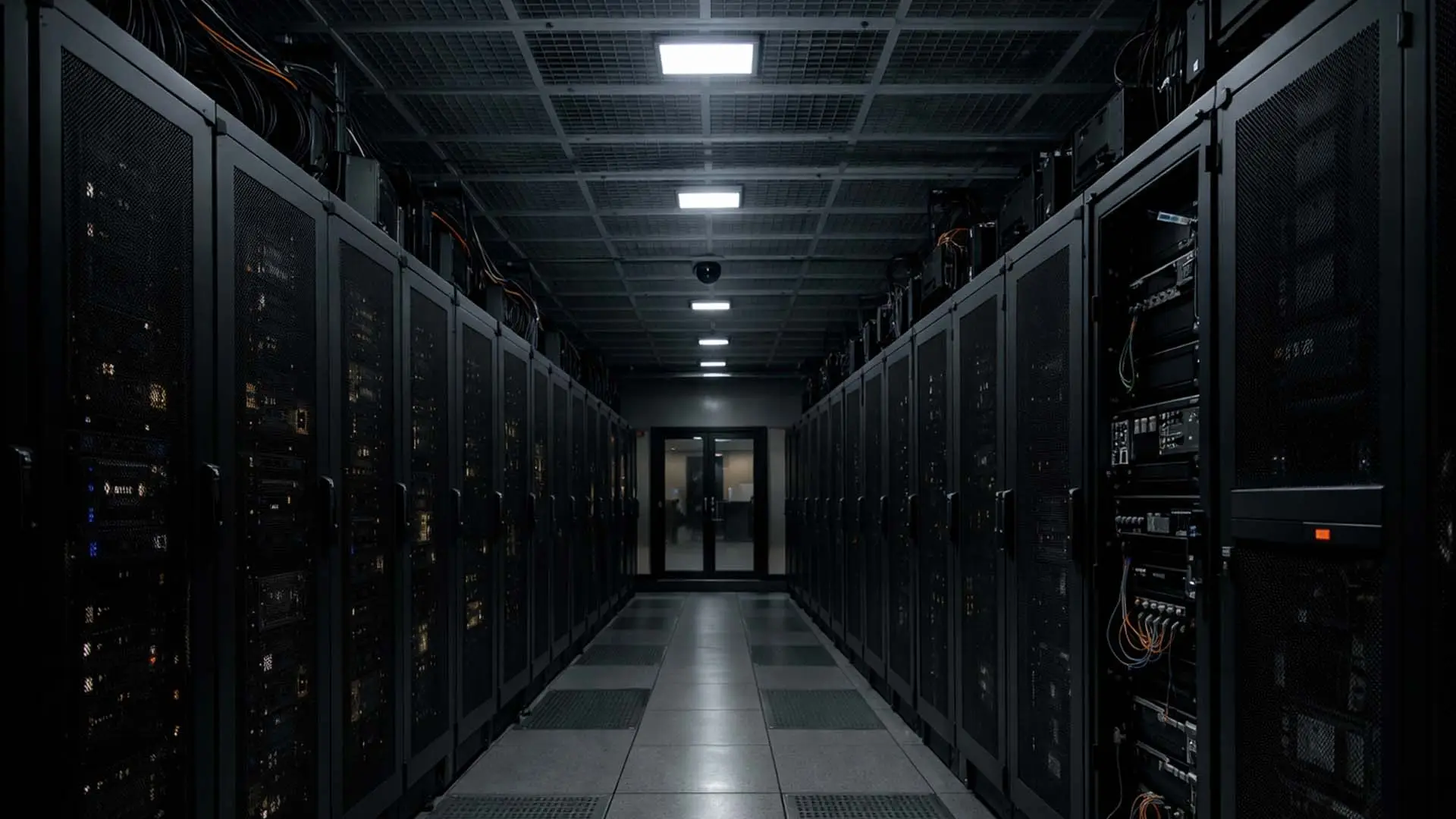
In today’s digital economy, every website, application, cloud platform, and online service depends on a silent but powerful backbone: the data center.
Many people imagine a data center as simply a room filled with servers and blinking lights. But the reality is far more complex. A data center is a carefully engineered environment designed to ensure that digital systems run reliably, securely, and continuously.
Understanding what a data center really does helps organizations appreciate why infrastructure planning is critical for digital success.
⸻
The Real Purpose of a Data Center
At its core, a data center is a facility that houses computing infrastructure used to process, store, and distribute digital information.
This infrastructure supports:
• Websites and web applications
• Cloud computing platforms
• Financial systems
• Government digital services
• Media and streaming platforms
• Enterprise databases
Every time someone sends an email, visits a website, streams a video, or processes an online payment, a data center is working behind the scenes.
But keeping these systems running is not as simple as plugging servers into electricity.
⸻
Power Redundancy: Keeping Systems Alive
One of the most critical components of a data center is power redundancy.
Unlike office environments where occasional outages may only disrupt work temporarily, downtime in a data center can cause:
• Financial losses
• Service outages
• Data corruption
• Reputation damage
To prevent this, data centers are designed with multiple layers of power backup:
Primary Power Supply
Electricity from the national grid or primary power source.
Uninterruptible Power Supply (UPS)
Battery systems that instantly take over during power interruptions.
Backup Generators
Large generators that can power the entire facility for extended periods.
This layered design ensures that even if one system fails, another immediately takes over.
In well-designed environments, users may never even notice that a power failure occurred.
⸻
Cooling Systems: Protecting the Hardware
Servers generate a significant amount of heat.
Without proper cooling, temperatures can rise quickly, leading to hardware failures, reduced performance, or permanent damage.
This is why data centers invest heavily in precision cooling systems, including:
• Computer Room Air Conditioning (CRAC) units
• Liquid cooling systems
• Hot aisle and cold aisle containment
• Environmental monitoring sensors
Temperature, humidity, and airflow are continuously monitored to maintain optimal operating conditions.
This controlled environment allows servers to run efficiently for years.
⸻
Understanding Data Center Tier Classifications
Not all data centers are built the same. To standardize reliability levels, facilities are categorized into Tier classifications.
These tiers help businesses understand the resilience of the infrastructure hosting their systems.
Tier I – Basic Infrastructure
Single power and cooling path with limited redundancy.
Tier II – Redundant Capacity Components
Additional backup components for improved reliability.
Tier III – Concurrently Maintainable
Systems can be maintained without shutting down operations.
Tier IV – Fault Tolerant
Multiple independent systems ensure continuous operation even during failures.
Higher-tier data centers offer stronger reliability but also require greater investment.
Organizations must choose infrastructure based on their operational needs and risk tolerance.
⸻
Uptime Reality: Why Infrastructure Matters
You often hear hosting providers advertise 99.9% uptime.
While this number sounds impressive, many businesses do not realize what it actually means.
Even small percentages of downtime can translate into significant service disruptions over time.
For example:
• 99% uptime allows over 3 days of downtime per year
• 99.9% uptime allows about 8 hours of downtime annually
• 99.99% uptime reduces downtime to less than 1 hour per year
For critical systems like financial platforms, government services, and enterprise software, these differences matter significantly.
Infrastructure design directly impacts uptime reliability.
⸻
Why Many Businesses Misunderstand Infrastructure
One of the most common mistakes organizations make is focusing only on front-end digital presence.
Companies invest in:
• Website design
• Mobile apps
• Branding and digital marketing
But often overlook the infrastructure that keeps these systems running.
Without reliable infrastructure, even the best-designed digital platforms can suffer from:
• Slow performance
• Security vulnerabilities
• Unexpected downtime
• Poor user experience
Digital success is not only about software. It is about systems that are engineered for stability and scale.
⸻
Infrastructure Is a Strategic Decision
As businesses grow and digital adoption increases, infrastructure must evolve accordingly.
Modern digital services require:
• Scalable cloud environments
• Secure hosting architectures
• Redundant infrastructure design
• Performance optimization
This is where infrastructure expertise becomes essential.
At Yahmis NG, infrastructure planning begins before deployment — because resilience is designed, not assumed.
By aligning technology architecture with long-term operational needs, organizations can build platforms that remain reliable, secure, and scalable as demand grows.
⸻
Final Thoughts
The digital services we rely on every day appear seamless from the outside.
But behind every successful application, website, or online platform is a carefully designed infrastructure environment working continuously to keep systems online.
Understanding the role of data centers helps organizations move beyond surface-level digital solutions and begin building technology systems that are engineered for reliability, performance, and long-term growth.
Because in the world of digital infrastructure, success is rarely accidental — it is designed.
⸻
About the Author
Yahaya Shuaibu Musa, MNCS, FCSEAN
Certified Cloud Computing Professional
Chief Technology Officer, Yahmis NG
He specializes in cloud infrastructure, enterprise hosting solutions, digital systems architecture, and technology consulting for organizations seeking reliable and scalable digital platforms.
Yahmis NG Services
• Cloud Infrastructure Deployment
• Enterprise Web Hosting
• Software Development
• Data Center Consulting
• Government Digital Systems
🌐 www.yahmisng.com
